





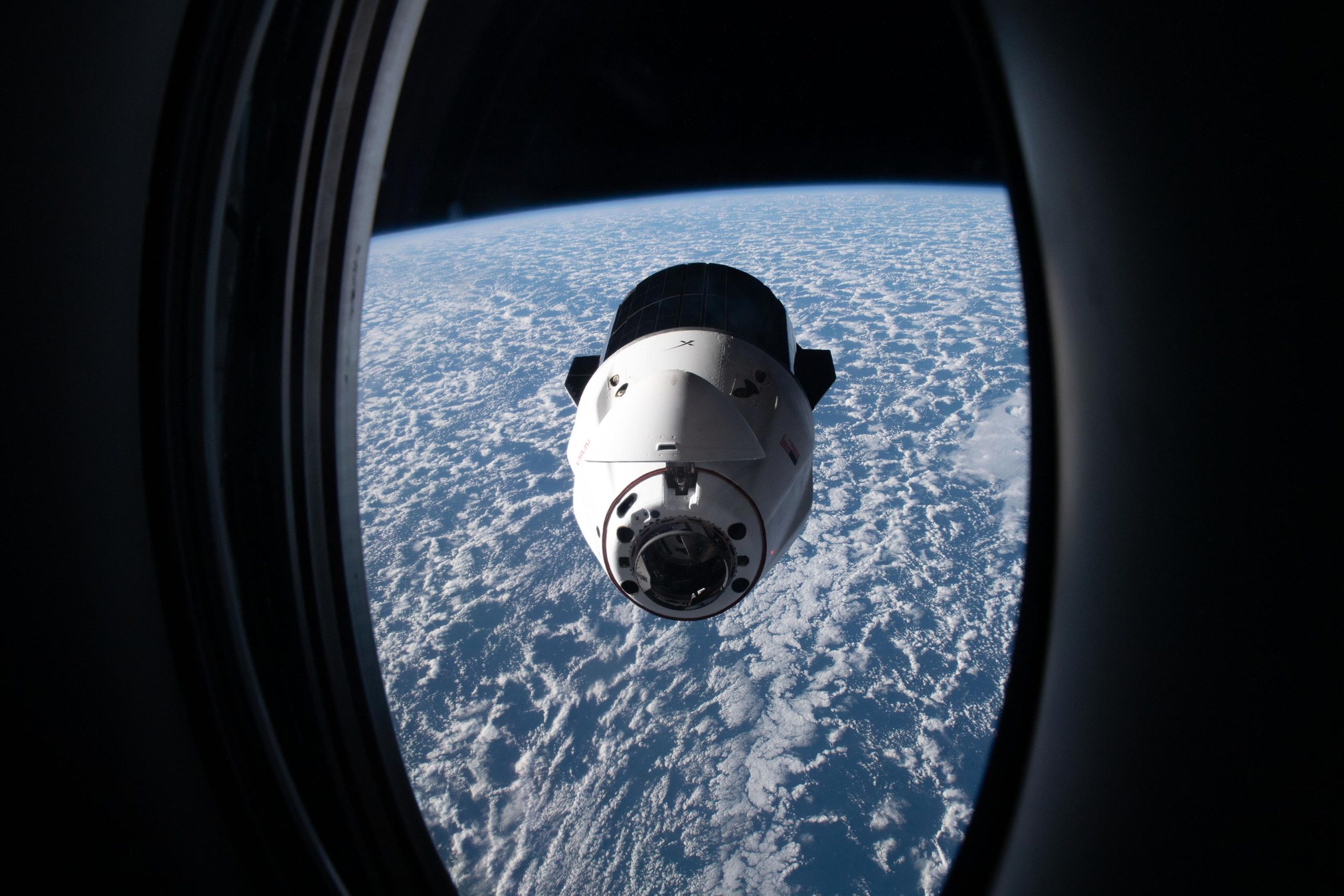
Un navire de ravitaillement SpaceX Dragon transportant plus de 5 800 livres de nouvelles expériences scientifiques et de fournitures d’équipage, photographié depuis une fenêtre du navire d’équipage SpaceX Dragon Freedom, s’approche de la Station spatiale internationale au-dessus de l’Atlantique Sud. crédit : Nasa
International Space Station (ISS) for NASA. The spacecraft carried more than 4,000 pounds of valuable scientific experiments and other cargo back to Earth.
Dragon was released from the forward port of the International Space Station’s Harmony module at 11:05 a.m. on Friday, August 19, while the ISS was flying 259 miles over the Pacific Ocean. It arrived at the space station on July 16, following a launch two days earlier on a SpaceX Falcon 9 rocket from Launch Complex 39A at NASA’s Kennedy Space Center in Florida.
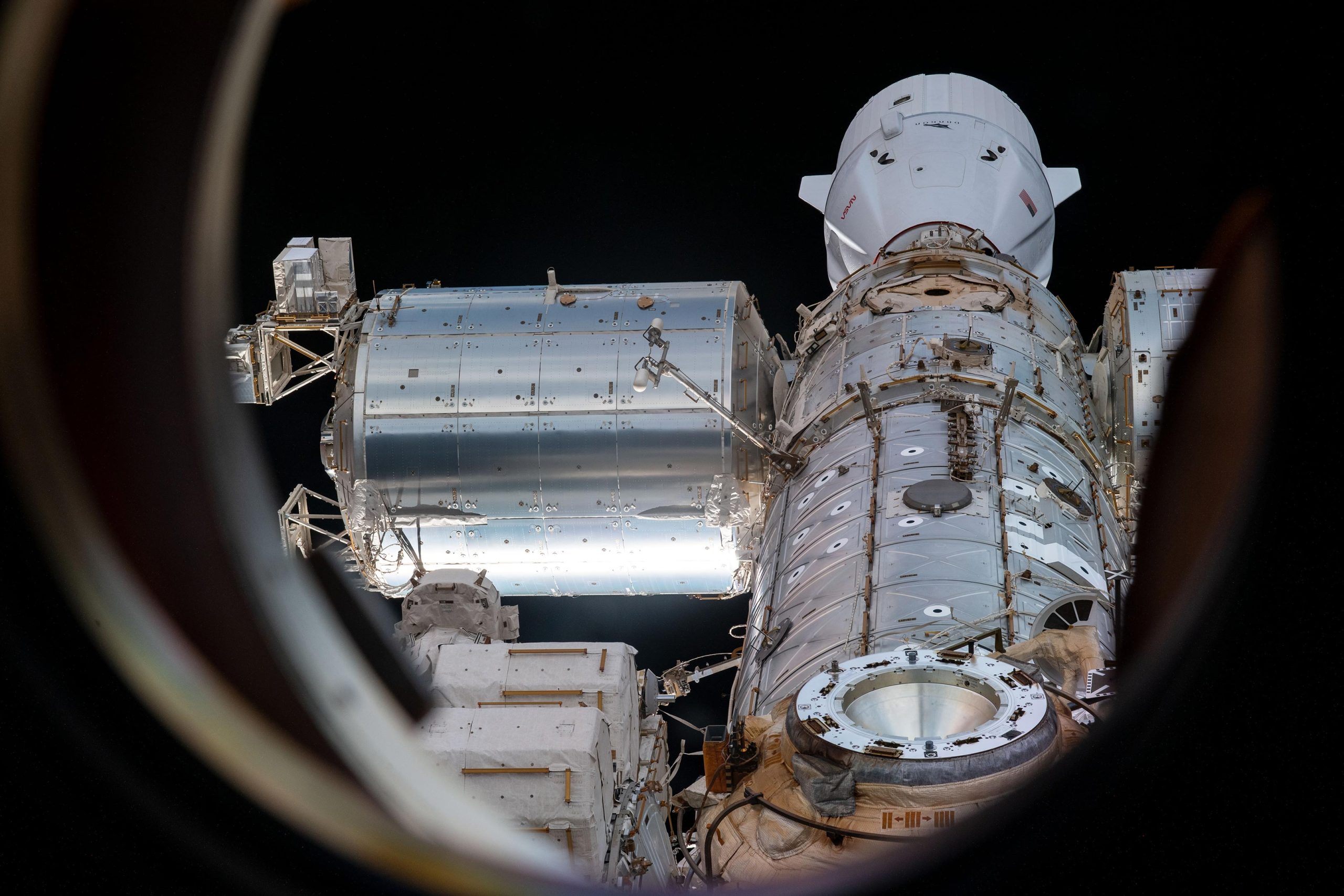
This view of the International Space Station from a window on the orbiting lab’s Russian segment shows portions of the Rassvet module’s docking port, the U.S. Destiny laboratory module, the Harmony module, Columbus laboratory module, and the Kibo laboratory module. Docked to Harmony at top, is the SpaceX Dragon resupply ship. Credit: NASA
Some of the scientific investigations returned by Dragon include:
- Space’s impact on materials: The Materials International Space Station Experiment-15-NASA (MISSE-15-NASA) experiment tests, qualifies, and quantifies the impact of the low-Earth orbit environment on new materials and components, such as spacecraft materials and wearable radiation protection. Successful experiment results could have applications both in the harsh environments of space and on Earth.
- Spacesuit cooling: Spacesuit Evaporation Rejection Flight Experiment (SERFE) demonstrates a new technology using water evaporation to remove heat from spacesuits and maintain appropriate temperatures for crew members and equipment during spacewalks. The investigation determines whether microgravity affects performance and evaluates the technology’s effect on contamination and corrosion of spacesuit material.
- Cell signaling in microgravity: The ESA (European Space Agency) sponsored investigation Bioprint FirstAid Handheld Bioprinter (Bioprint FirstAid) enables the rapid use of formerly prepared bio-inks, containing the patient’s own cells, to form a band-aid patch in the case of injury.
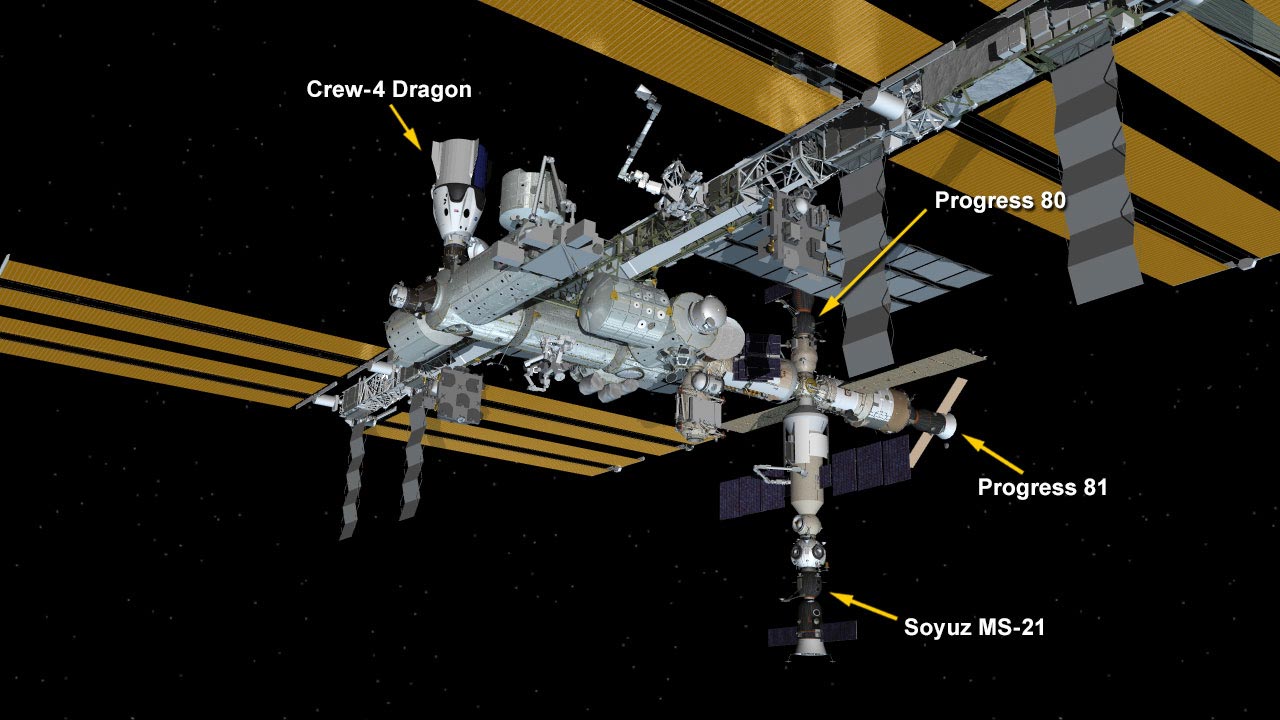
August 19, 2022: International Space Station Configuration. Four spaceships are docked at the space station including the SpaceX Crew Dragon Freedom and Russia’s Soyuz MS-21 crew ship and the Progress 80 and 81 resupply ships. Credit: NASA

Océane Rousseau est rédactrice pour Dakarinfo.net, où elle couvre l’actualité nationale et internationale, ainsi que des sujets liés à la politique, l’économie, la technologie, le sport, le divertissement et l’art de vivre. Elle privilégie une information claire, fiable et accessible, en mettant l’accent sur les faits et leur impact concret sur le quotidien des lecteurs. Son travail vise à offrir des analyses compréhensibles et des récits pertinents qui permettent de mieux suivre les enjeux de l’actualité.




D'autres articles
RoBeetle, le robot-scarabée sans batterie conçu pour explorer les endroits inaccessibles
ArcSpace lève 2 millions d’euros pour tester sa technologie de soudage dans l’espace
Sophie Adenot deviendra la première Française à effectuer une sortie dans l’espace